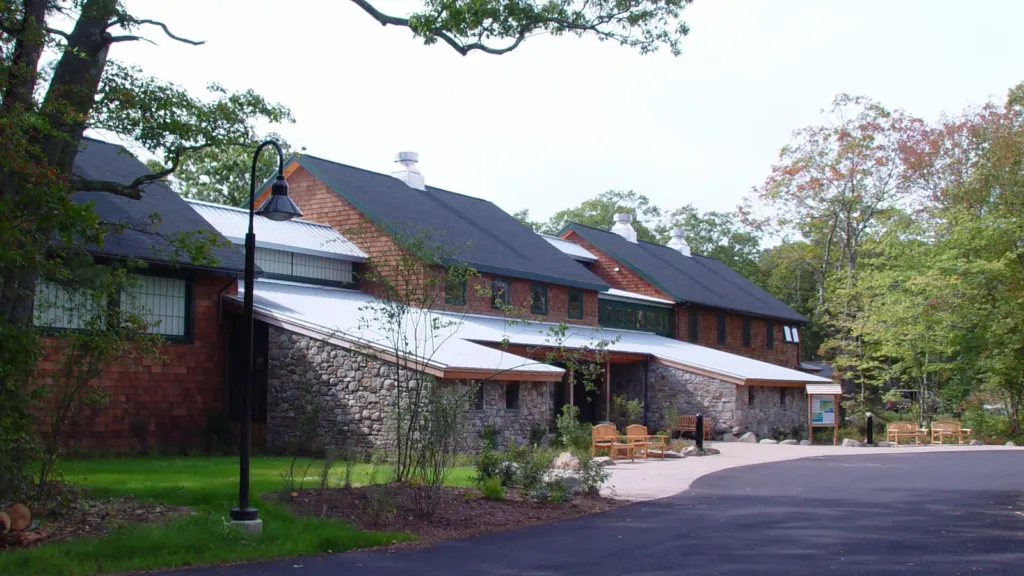
The Kettle Pond Visitor Center on Bend Road, the refuge's headquarters. Photo: U. S. Fish and Wildlife Service - Northeast Region, public domain, via Wikimedia Commons.
Late fall is a good time to walk the Ninigret National Wildlife Refuge in Charlestown. The summer crowds are gone, migrating birds are moving through, and the trails are free and open every day. A few rules catch first-time visitors off guard, though, starting with where dogs can and can’t go.
Here is what to know before you go, based on the U.S. Fish and Wildlife Service’s refuge page and its rules and policies, which the agency last updated Nov. 9.
Two units, two kinds of walk
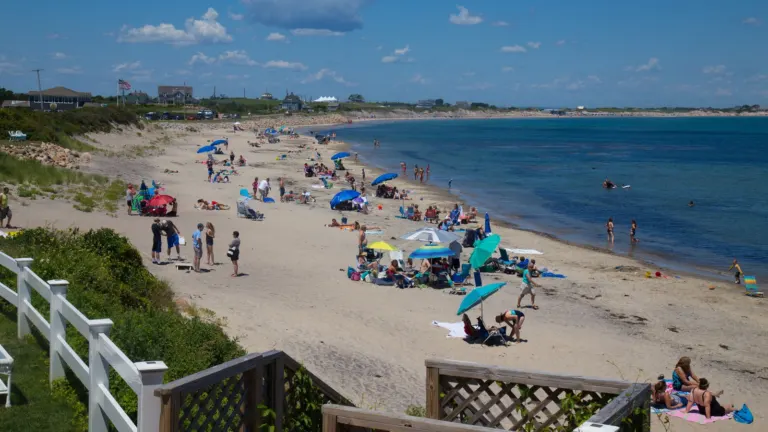
The refuge covers 858 acres of grassland, shrubland and wooded swamp and has more than 4 miles of hiking trails. It was set up in 1970 on land that was once part of the Charlestown Naval Auxiliary Landing Field, and it looks out over Ninigret Pond, the largest coastal salt pond in Rhode Island.
The Kettle Pond Unit, at 50 Bend Road, is the refuge headquarters. It has the visitor center with its habitat dioramas and about 1.5 miles of trails through oak and pine woods that lead to Watchaug Pond or to an observation tower. The visitor center is open 10 a.m. to 3 p.m. daily in winter and until 4 p.m. in summer.
The Salt Pond Unit has about 3 miles of trails with views of the pond and reminders of the old Navy airfield. You can reach it from Route 1, at the Ninigret West entrance, or through the town’s Ninigret Park, at Ninigret East. The service lists a seasonal bathroom at Ninigret East.
The trails are open from sunrise to sunset. With sunset around 4:15 p.m. this week, that leaves a short afternoon window, so plan a morning or early afternoon walk.
Dogs, bikes and kites
Dogs, horses and other pets are not allowed on most of the refuge. The exception is the trail system at the Kettle Pond Visitor Center, where leashed dogs are welcome on every trail except the Toupoysett Pond Trail. Service animals are allowed under the Americans with Disabilities Act.
Bicycles and rollerblades are not allowed on refuge trails, and visitors are asked to stay on the marked paths.
Kite flying is banned as well. The service explains that during nesting season a kite can look like a large predatory bird, which can scare adult birds enough that they abandon their nests. Disturbing or removing wildlife, plants or refuge facilities is prohibited.
The refuge also allows fishing, hunting and trapping under its own regulations, and the service notes that additional rules may apply. Anyone planning to hunt or fish there should call refuge headquarters at 401-364-9124 before heading out.
What it costs
Entry to the refuge is free. The only pass is for Sandy Point Island, which requires one from Memorial Day through Labor Day. Those passes are sold through the state’s RecAccess system, and there is nothing to buy for a winter visit.
Know the neighbors
Ninigret East shares its entrance with Ninigret Park, where the Army Corps of Engineers is studying PFAS contamination left from the Navy years. We covered where that investigation stands last week. For more on the pond itself, see our explainer on who manages South County’s salt ponds and breachways, and for the history behind the name, our profile of Ninigret, the Niantic sachem.
Ninigret is one of five national wildlife refuges in Rhode Island, all managed from the Kettle Pond headquarters. The service’s Rhode Island refuge complex takes questions at rhodeislandcomplex@fws.gov.
Add South County Independent as a preferred source on Google (opens in a new tab)