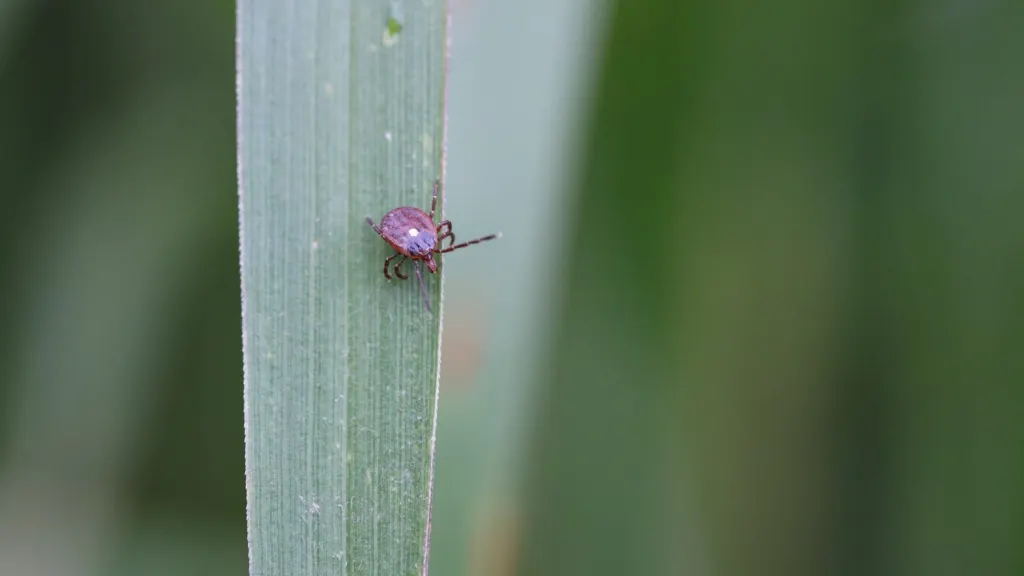
A female lone star tick, one of three species DEM lists as a main concern in Rhode Island. Photo: NIAID / Wikimedia Commons, CC BY 2.0
Researchers from the University of Rhode Island are collecting ticks along Block Island’s hiking trails to find out which species live there and what diseases they carry. It is one of two new tick surveillance projects the state Department of Environmental Management announced this week, and DEM describes both as the first state-led efforts of their kind.
The Block Island study is a pilot run with the Town of New Shoreham. The second project covers the rest of the state, sampling popular public trails and busy recreation areas. Both are led by Jannelle Couret, an associate professor of biological sciences at URI’s Kingston campus, according to DEM’s Nov. 23 announcement.
What the Block Island study does
Field teams collect live ticks on the island and bring them to URI, where they are processed and then tested for pathogens that cause tick-borne disease. DEM says the results will guide future work to control tick populations and to teach people how to avoid bites, with the goal of cutting tick-borne illness on the island. The island project is expected to run through September 2027.
For New Shoreham, the study answers a request the town has been making for a while. “Last year, the New Shoreham Town Council declared tick-borne disease a public health crisis on Block Island, and our residents and visitors live with its effects every day, from Lyme disease to the alarming rise in alpha-gal syndrome,” Town Manager Amy Lewis Land said in the release.
Land said solid data on the island’s ticks and pathogens will also support the town’s work with state partners on reducing the deer population, which she called “the primary host for the ticks that are making our community sick.”
The statewide project
The mainland study is paid for with a $250,000 Rural Health Transformation Program grant through the state Executive Office of Health and Human Services. It will feed outreach by URI’s TickEncounter program and Cooperative Extension, and DEM says it is meant to inform future statewide tick control plans. That project is expected to run through July 2027.
“We know that tick-borne disease is a growing health concern, in particular for people living and visiting rural Rhode Island,” said Ana Novais, an assistant secretary at EOHHS. Couret said the first job is baseline data. “Learning what type of ticks and when and where they are most abundant will help inform the most effective efforts to prevent tick bites,” she said.
The ticks researchers are watching
DEM lists three tick species of main concern in Rhode Island:
- Blacklegged, or deer, ticks, the species most people in South County know from Lyme disease.
- Lone star ticks, an invasive species that DEM says has spread rapidly across the state. Its spread has raised concern about alpha-gal syndrome, a potentially life-threatening allergy to red meat.
- Dog ticks, which can carry their own set of pathogens.
The state also tracks the invasive Asian longhorned tick. It was first found in Rhode Island in 2020 and is becoming more common, but DEM says it is not currently considered a human health risk.
DEM Director Terry Gray called the growth of different tick species “a definite concern” and said the surveillance is “a critical first step” in gathering data to keep Rhode Islanders safer.
What it means for trail users
The projects focus on trails because that is where people and ticks are most likely to meet. Block Island’s trail network draws hikers year-round, and the island’s land stewards have described a hard year keeping paths open.
Anyone heading into the woods on the mainland this season has a second reason for care: shotgun deer season opens Dec. 5, and hikers at Great Swamp and Arcadia will need to wear orange. Our guide to ticks and Lyme disease in Rhode Island covers prevention and testing. More island news is in our Block Island section.
Add South County Independent as a preferred source on Google (opens in a new tab)