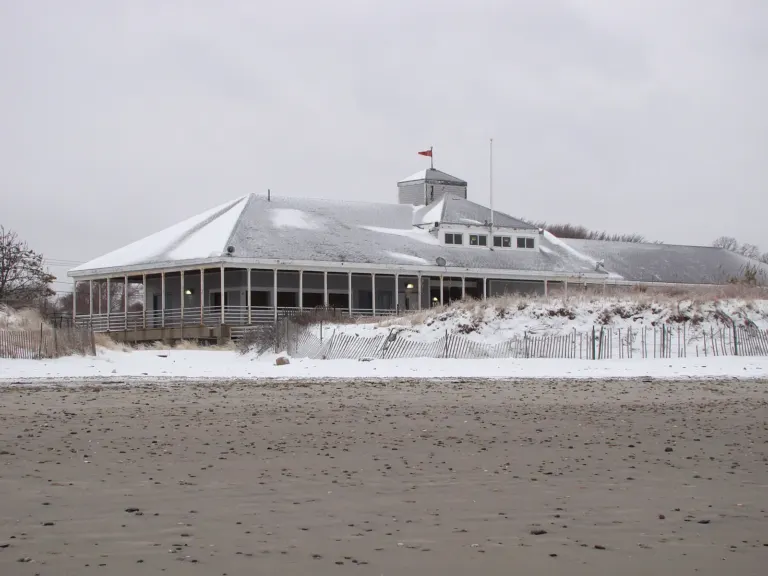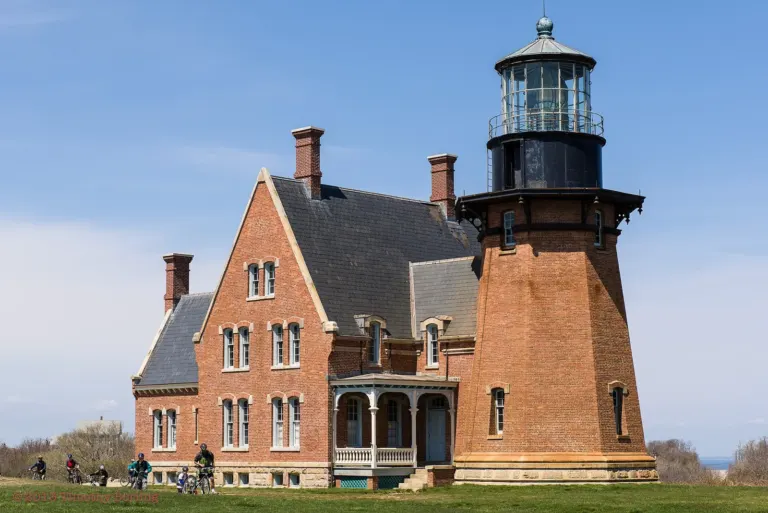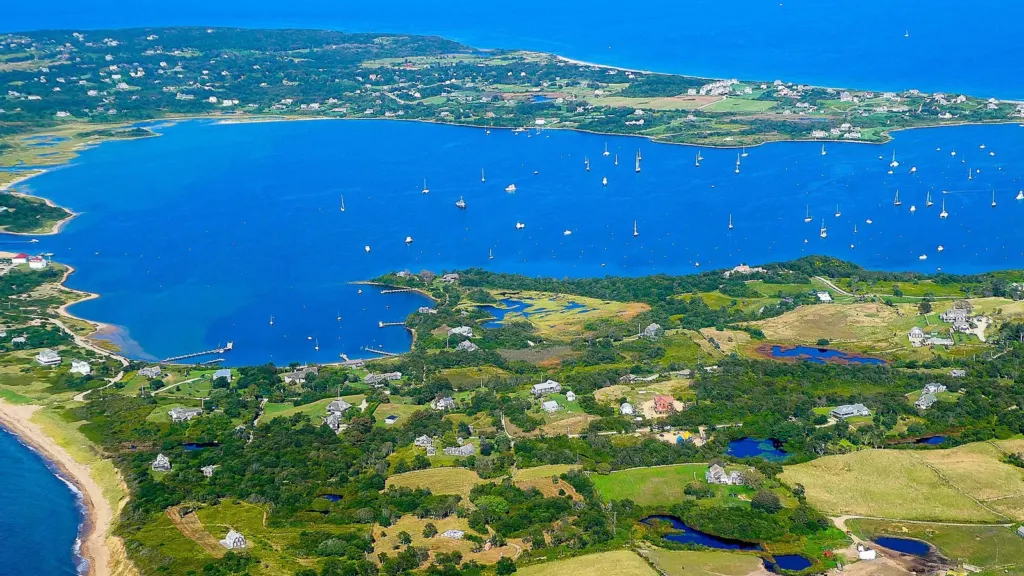
The Great Salt Pond on Block Island. Photo: Timothy J. Quill, CC BY-SA 4.0, via Wikimedia Commons.
Bay scallop season opens Saturday, Nov. 7, in the Great Salt Pond, and this year Block Island plans to hold nonresidents to the rule that only Rhode Islanders can take scallops. The season runs through Dec. 31.
The rest of the pond has been open since sunset on Oct. 12, when the summer closures around the marinas, Trims Pond and Harbor Pond lifted. Since then, licensed clammers have been taking quahogs, sea clams and mussels at the off-season limit of eight quarts a day each. Oyster season has been open since mid-September. Scallops have to wait.
A residents-only rule, enforced this time
Last winter the New Shoreham Shellfish Commission tried to go further and limit scallop harvesting to Block Island residents, as a way to protect a population that is small and swings a lot from year to year. The town’s lawyers didn’t think that would hold up. So the commission fell back on state law.
Rhode Island already bans nonresidents from taking or possessing bay scallops anywhere in state waters. That’s in the state’s marine fisheries code, under the Department of Environmental Management. The town’s 2026 shellfish guide now says it plainly: the Block Island scallop season is open to Rhode Island residents only.
The difference is enforcement. The town sells shellfish licenses to visitors, and those licenses are good for quahogs and other species. At the commission’s Oct. 13 meeting, members said they couldn’t add the no-scallops language to nonresident licenses electronically, so it had been written on them by hand, according to The Block Island Times. Boats from Connecticut were singled out as a recurring problem. One member said that because it’s the first year the restriction is being pushed, “It’s going to take a lot more wardening.”
That’s harder in the fall. Three seasonal shellfish wardens left the island in October. Harbormaster Kate McConville thanked them at the meeting: “Three great women left last week.” The Harbors Department says its staff still patrol the shellfish grounds, and wardens will be checking licenses.
What the rules say
For anyone heading out with a dip net, the basics:
- Everyone 14 and older needs a New Shoreham shellfish license, and you have to carry the town gauge. Children under 14 must be with a licensed adult.
- Only second-year scallops can be taken. The town guide says to look for a clear growth line near the middle of the shell. Seed scallops go back in the water right away.
- The state recreational limit is one bushel per person per day.
- Harvesting is allowed from sunrise to sunset only. No scuba gear, no powered equipment. Dip nets are allowed for scallops.
- The oyster sanctuary off Cormorant Point stays closed all year.
The Harbors Department office is at 401-466-3204.
Trying to bring back soft-shell clams
Opening day doubles as a research day. Roxanne Banker, a biologist at Providence College, is scheduled to come out Nov. 7 to keep working with the commission on its soft-shell clam restoration project.
Soft-shells, or steamers, have become scarce in the Great Salt Pond, and the town guide lists them as closed until further notice. The main problem is predators, especially invasive European green crabs, which eat the clams while they’re small.
For a few years the commission has been growing soft-shells from seed in netted, numbered plots near Andy’s Way. In May 2025, Banker and her students took core samples from those plots to count and measure the clams. The commission has also set out recruitment boxes, framed boxes with mesh fine enough to keep predators out while letting larvae settle inside, and installed sensors to track water temperature around spawning time.
The late-September nor’easter set that work back. The recruitment boxes at Cormorant Cove were lost, and a sensor mounted under a dock there broke loose and had to be pulled off the bottom. The sensor is now drying out in a bucket of fresh water in a commission member’s garage, the Times reported.
For people who stay on the island through the winter, the pond is where a lot of dinners come from. Whether the residents-only rule shows up in the pond as more scallops next year will be hard to measure in one season. The commission is betting that a few more license checks in November will help.