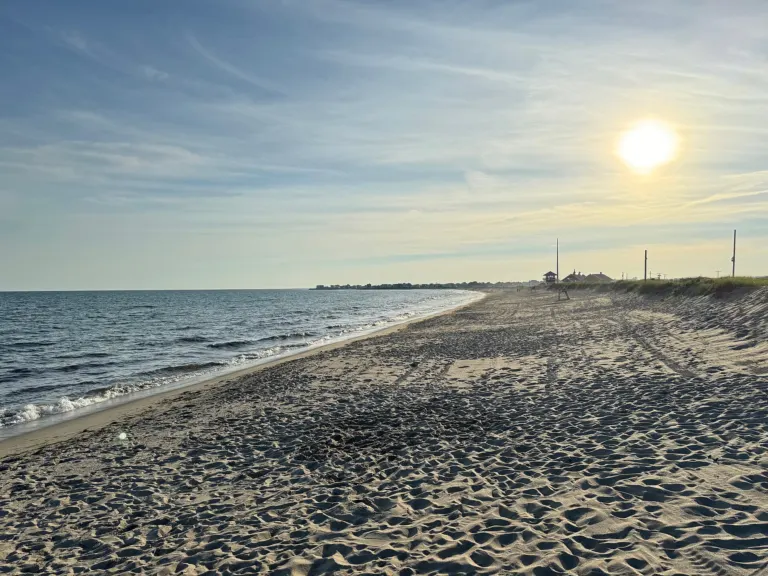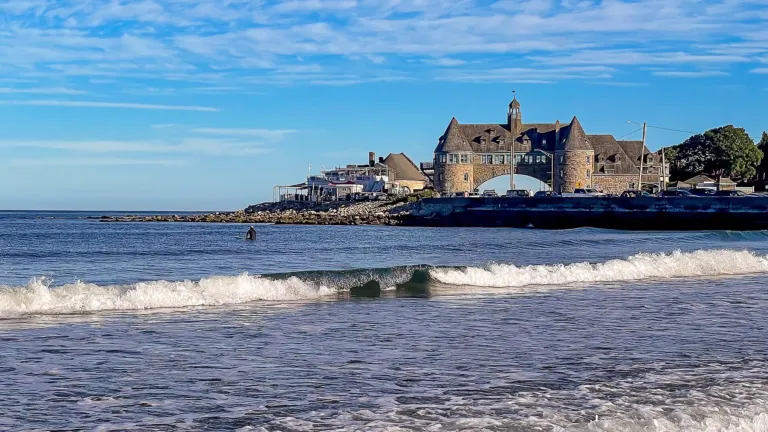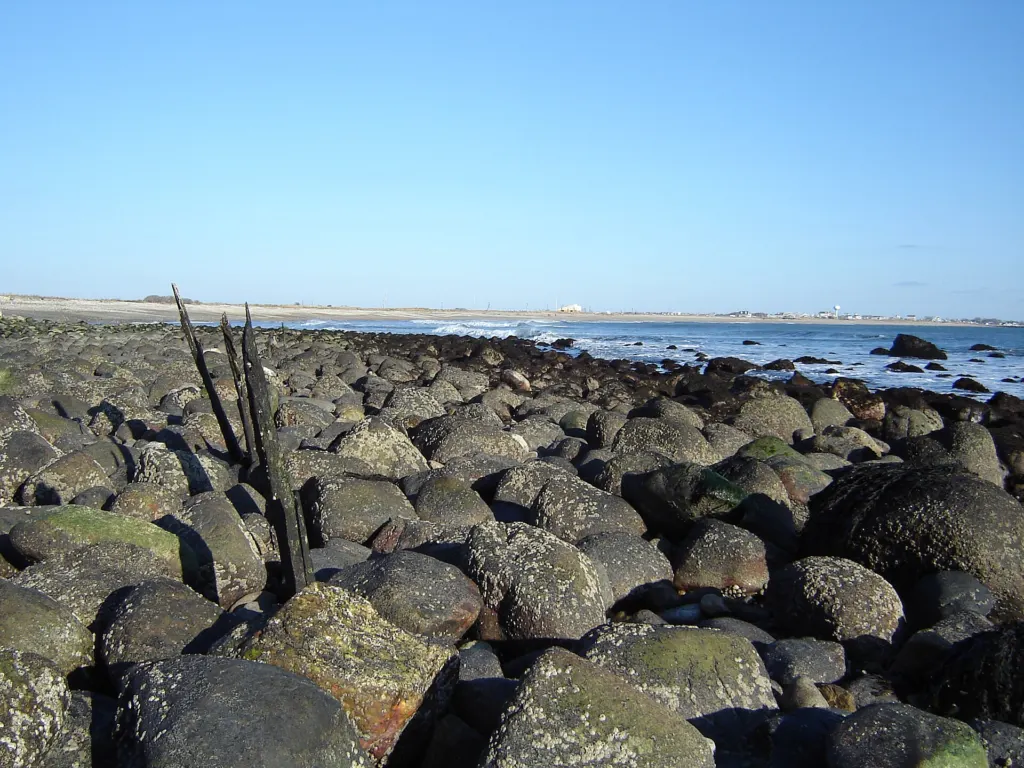
Photo: LaesaMajestas / Wikimedia Commons, CC BY-SA 4.0
Erosion is a fact of life on the South County shore. Storms carry away sand from beaches and bluffs, and the shoreline has retreated measurably in places such as Matunuck and Misquamicut over the past century. When the water gets close to a house, a business or a road, owners often ask to build a seawall or revetment. In Rhode Island, the answer depends on the Coastal Resources Management Council.
What CRMC is
The council, known as CRMC, was created by the General Assembly in 1971 to manage the state’s coastal resources. It regulates construction and alterations in coastal areas and in the 200 feet inland from a coastal feature such as a beach, dune or bluff, through a rulebook called the Rhode Island Coastal Resources Management Program, often called the “Red Book.” Decisions are made by an appointed council with staff engineers, biologists and planners reviewing applications.
How the rules treat seawalls
CRMC’s rules generally discourage new structural shoreline protection such as seawalls, bulkheads and revetments, especially on beaches and dunes. Hard structures can protect what is behind them while making erosion worse on neighboring properties and narrowing or eliminating the beach in front. The rules favor nonstructural approaches first, such as moving structures back from the shore, adding sand and planting dune grass. In some locations and circumstances, the council can approve structural protection, typically with conditions and a showing that alternatives are not feasible.
Planning for change
CRMC adopted the Rhode Island Shoreline Change Special Area Management Plan, known as the Beach SAMP, in 2018. It provides maps of projected erosion and sea level rise and guidance for property owners, towns and the council on designing projects with future conditions in mind. The online STORMTOOLS maps let anyone see projected flooding under different storm and sea level scenarios.
If you own coastal property
- Call CRMC before starting work near the shore. Even small projects, such as a new deck or replacing a set of beach stairs, may need a permit.
- Check the Beach SAMP and STORMTOOLS maps for your property.
- Talk to the town building and planning offices, since town permits are also required.
- Ask about flood insurance requirements and rates, which depend on FEMA flood zones and building elevation.
CRMC meeting agendas and decisions are posted on the council’s website, and its meetings are open to the public.