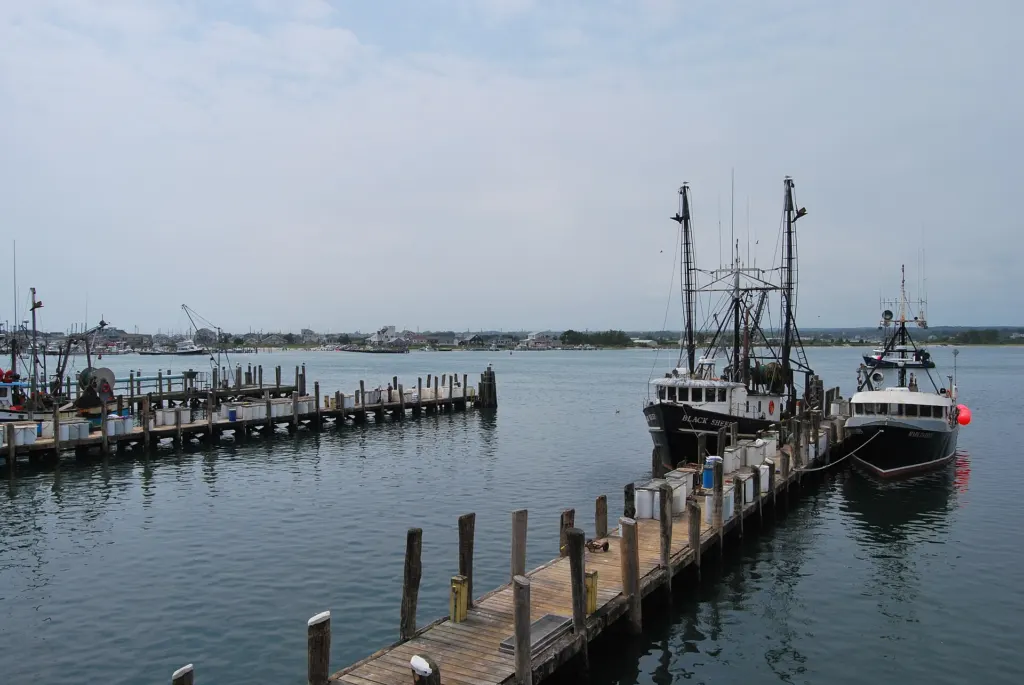
Photo: Juliancolton / Wikimedia Commons, Public domain
Most harbors are a patchwork of private docks, town moorings and public landings. The Port of Galilee in Narragansett is different: the land and piers belong to the State of Rhode Island, and the Department of Environmental Management acts as landlord to the fish houses, restaurants, shops and fishing vessels that use them.
Two kinds of tenants
- Waterfront businesses such as seafood processors, fuel docks, restaurants and retail shops lease parcels from the state, typically under multi-year leases with set rent terms.
- Commercial fishing vessels pay dockage fees for berths along the state piers, generally based on the size of the vessel and the type of berth.
Lease rates and fees are set through state rules and contracts. Over the years, proposed rent increases and changes to how fees are calculated have drawn objections from fishermen and business owners, who argue that a working port needs affordable access, and from lawmakers who want the port to cover more of its costs.
Paying for a working harbor
Bulkheads, piers, dredging and utilities in a saltwater port wear out and are expensive to replace. The state has used a mix of port revenue, state borrowing approved by voters and federal grants to rebuild piers at Galilee. Projects are typically planned years in advance and require permits from CRMC and federal agencies.
Who decides
DEM manages the port day to day. Changes to fee schedules generally go through the state’s rulemaking process, which includes public notice and an opportunity for comment. The General Assembly sets the broader framework and can direct how port revenue is used.
How to follow it
- Proposed state regulations, including port fee changes, are published on the Rhode Island Secretary of State’s regulations website, where the public can submit comments.
- DEM posts information on the Port of Galilee and its improvement projects.
- Fishing organizations, including the Rhode Island Commercial Fishermen’s Association and other industry groups, track port issues on behalf of their members.
For a port that supports hundreds of jobs on and off the boats, those decisions about rent and repairs matter well beyond the docks.
Add South County Independent as a preferred source on Google (opens in a new tab)