Photo: Alexarje / Wikimedia Commons, CC BY 4.0
In 2008, with crude oil prices at record highs, “peak oil” was a common topic in Rhode Island letters pages: the idea that world oil production was about to top out and prices would climb for good. Production instead rose with the U.S. shale boom, and prices have swung up and down since. For South County households, the lesson of the past two decades is that heating costs are hard to predict, which makes it worth knowing how to compare the options.
How South County heats
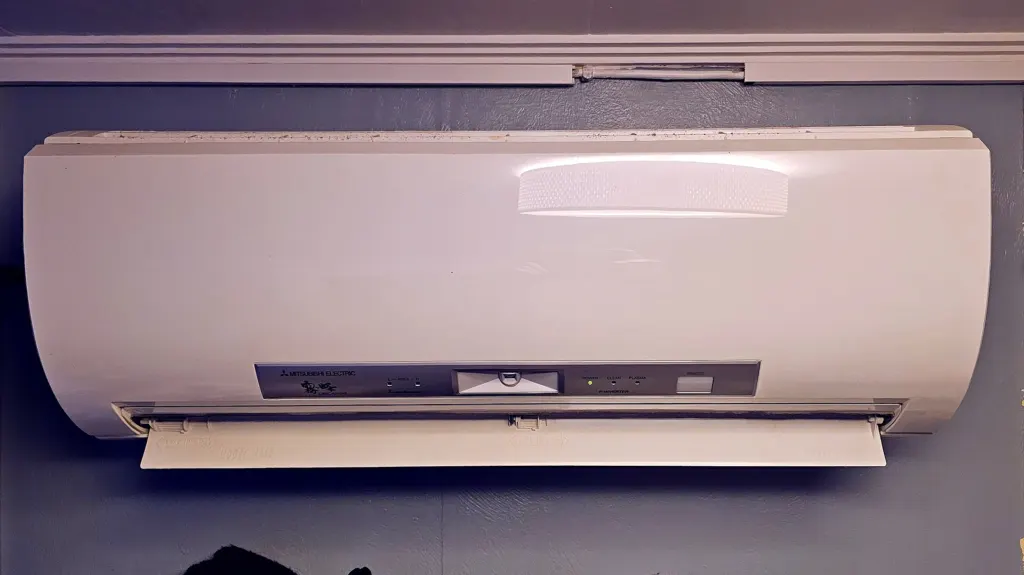
Rhode Island has a larger share of homes heated with fuel oil than most of the country, and many rural and coastal homes in Washington County are outside the natural gas network. Propane is common where gas lines do not reach. A growing number of homeowners are adding electric heat pumps, either as the main system or alongside an existing boiler or furnace.
Comparing fuels on an equal footing
Fuels are sold in different units, so the price per gallon or per kilowatt-hour does not tell you much on its own. The fair comparison is the cost of delivered heat, usually expressed per million British thermal units (MMBtu):
- A gallon of heating oil contains about 138,500 Btu; a gallon of propane about 91,500 Btu; a kilowatt-hour of electricity 3,412 Btu.
- Adjust for efficiency. An older oil boiler may deliver 80 percent or less of the fuel’s heat to the house, while a cold-climate heat pump can deliver two to three units of heat for each unit of electricity in typical winter weather.
- The U.S. Department of Energy and the Rhode Island Office of Energy Resources publish fuel cost calculators that do this math with your own prices.
Where to find current prices
During the heating season, from October through March, the U.S. Energy Information Administration publishes weekly residential heating oil and propane prices for Rhode Island through its State Heating Oil and Propane Program. Electricity rates are set out on Rhode Island Energy’s bill and in filings with the Rhode Island Public Utilities Commission. Many oil and propane dealers also offer fixed-price or capped-price contracts before winter; read the terms carefully, including any fees.
Rebates and help
- Heat pump incentives: the state’s Clean Heat Rhode Island program, run by the Office of Energy Resources, offers rebates for qualifying heat pump installations, and Rhode Island Energy’s efficiency programs offer additional incentives and no-cost home energy assessments.
- Weatherization: insulation and air sealing reduce costs no matter which fuel you use. Income-eligible households may qualify for free weatherization.
- Heating assistance: the federal Low Income Home Energy Assistance Program (LIHEAP) helps eligible households pay for oil, propane, gas or electric heat. In South County, applications are handled through regional community action agencies.
Before switching systems, get more than one quote, ask installers about sizing for Rhode Island winters and check whether your home needs insulation work first. The cheapest heat is the heat a house does not lose.
Add South County Independent as a preferred source on Google (opens in a new tab)