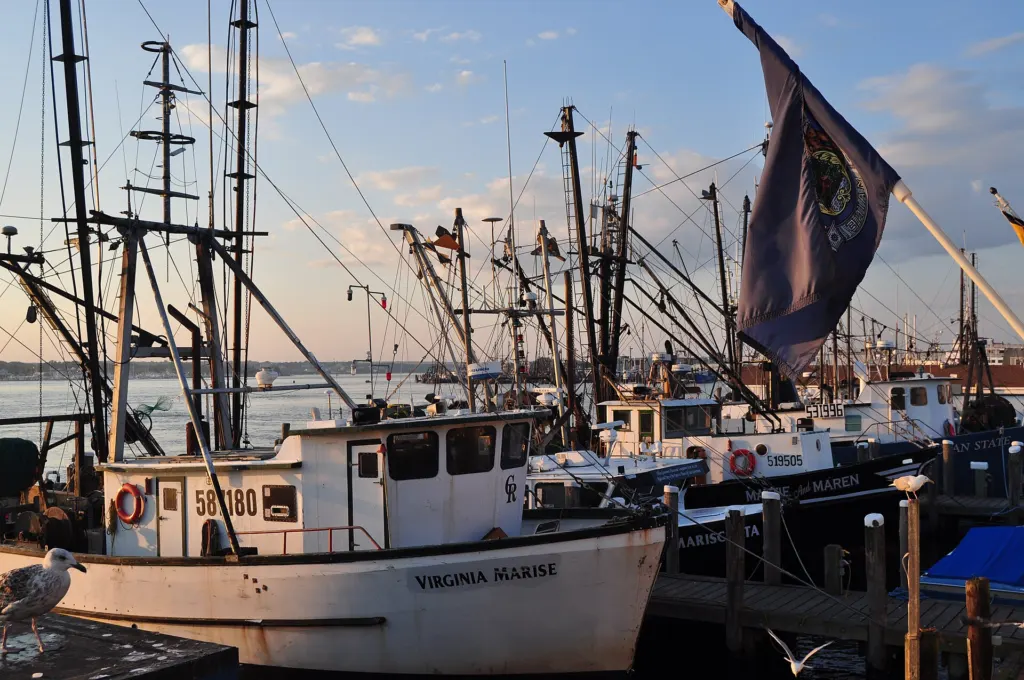
Photo: Juliancolton / Wikimedia Commons, Public domain
The Port of Galilee, on the Point Judith Pond side of Narragansett, is the home of Rhode Island’s largest commercial fishing fleet and one of the most important fishing ports on the East Coast. Dozens of vessels work out of the port, from small lobster boats to offshore trawlers, and the docks support processors, fuel suppliers, gear shops, ice plants and restaurants.
What the fleet catches
Longfin squid has been the port’s signature catch, and Rhode Island’s lawmakers named calamari the official state appetizer in 2014. Boats also land summer flounder, scup, black sea bass, butterfish, skates, monkfish, lobster, Jonah crab and sea scallops, among other species. The mix varies by season and by the federal and state rules that set how much of each species can be caught.
A state-owned port
Galilee is owned by the State of Rhode Island and managed by the Department of Environmental Management. The state leases waterfront parcels to businesses and charges vessels for dockage. Revenue from the port helps pay for maintenance of bulkheads, piers and other infrastructure that a working harbor needs.
How fishing is regulated
- Federal waters, from 3 to 200 miles offshore, are managed through regional councils, chiefly the Mid-Atlantic and New England Fishery Management Councils, with NOAA Fisheries setting and enforcing the rules.
- State waters are managed by DEM’s Division of Marine Fisheries, with advice from the Rhode Island Marine Fisheries Council.
- Quotas, permits, trip limits and closed areas are designed to keep stocks healthy, and they are frequently adjusted.
Pressures on the fleet
Fishermen point to several challenges: rising fuel and insurance costs, changing quotas, shifting fish populations as ocean waters warm, competition for space with offshore wind development, and the difficulty of recruiting young crew. Groups such as the Commercial Fisheries Research Foundation work with fishermen and scientists on cooperative research, and the University of Rhode Island’s fisheries programs train the next generation.
Seeing the port
Visitors can watch the boats come and go from the public areas near the ferry terminal, buy seafood at local markets and restaurants, and see the fleet honored at the annual Blessing of the Fleet in Narragansett each summer.
Add South County Independent as a preferred source on Google (opens in a new tab)