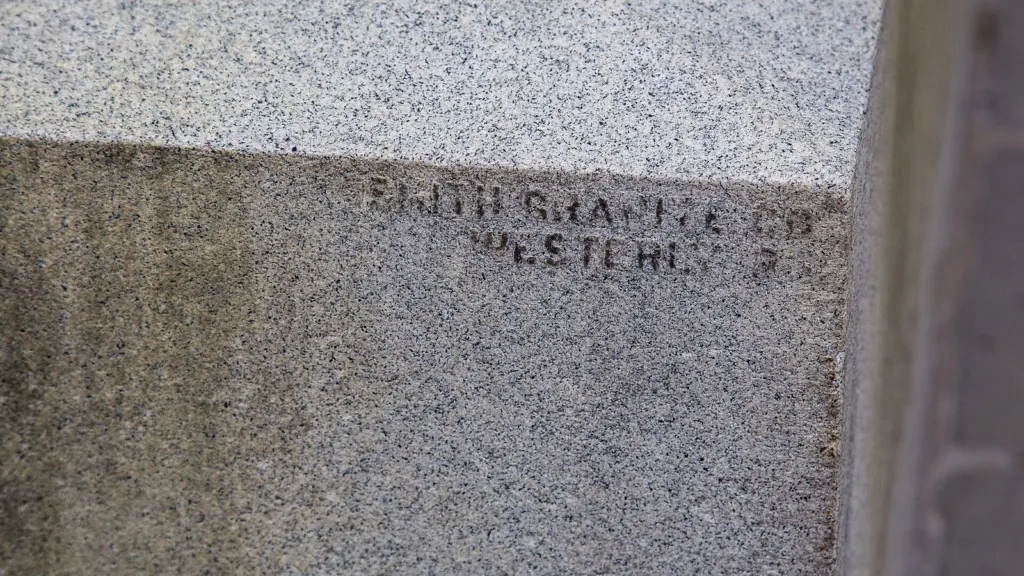
Photo: Kenneth C. Zirkel, CC BY-SA 4.0, via Wikimedia Commons.
In the 1840s Orlando Smith opened a quarry on Rhode Island’s border with Connecticut and found granite of unusual quality. The Westerly stone was fine-grained and even, which made it ideal for detailed carving.
The Smith Granite Company and other firms grew quickly. Skilled stonecutters came from Scotland, Italy and elsewhere, and by the late 1800s granite was the town’s main industry.
On battlefields and in cemeteries
Westerly granite became a favorite for Civil War memorials. Monuments and statues at Gettysburg and Antietam were carved from it, along with countless soldiers’ statues on town greens across the North. Wealthy families ordered Westerly granite mausoleums and headstones.
Decline
Demand fell in the 20th century as tastes changed and cheaper stone and materials became available. Most quarries closed by mid-century.
The Babcock-Smith House Museum on Granite Street, once home to Orlando Smith, tells part of the story. Visitors can still see granite buildings, curbstones and carved details around downtown Westerly, along with the monuments in River Bend Cemetery.
Add South County Independent as a preferred source on Google (opens in a new tab)