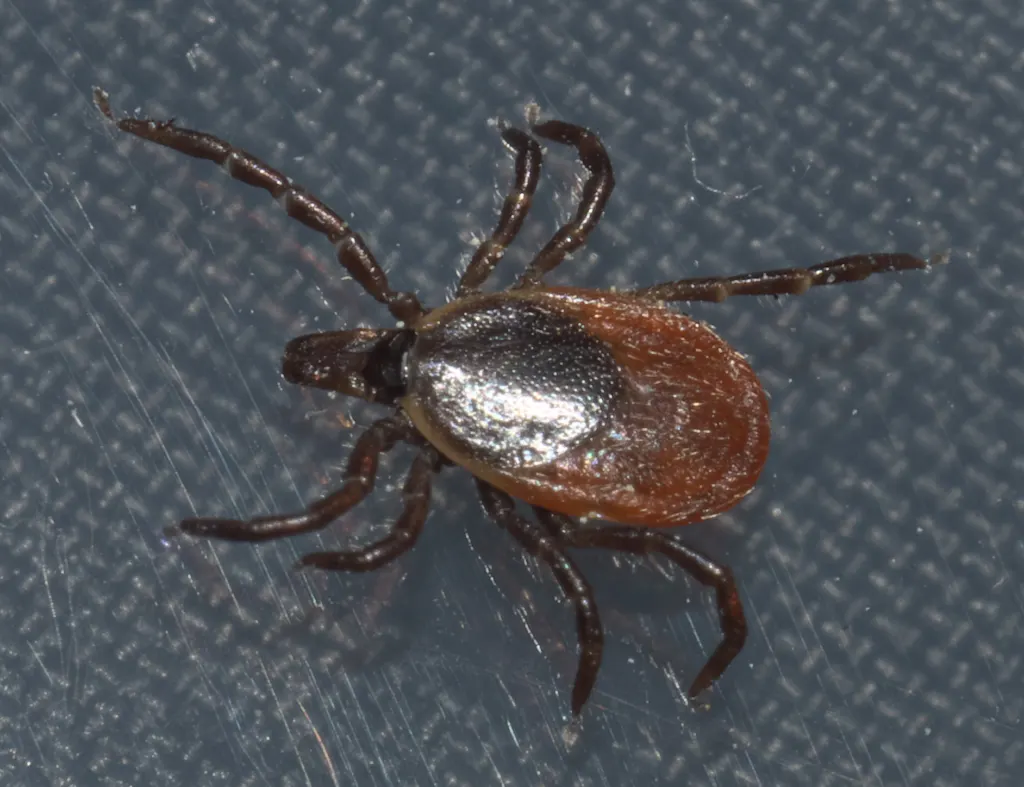
Photo: xpda / Wikimedia Commons, CC BY-SA 4.0
Rhode Island has some of the highest rates of Lyme disease in the country, and Washington County has historically reported many of the state’s cases. The blacklegged tick, often called the deer tick, carries the bacteria that cause Lyme disease, as well as the germs behind anaplasmosis and babesiosis.
When and where
Tiny nymph-stage ticks, about the size of a poppy seed, are most active in late spring and early summer and cause most infections because they are so hard to see. Adult ticks are active in fall and on warm winter days. Ticks live in leaf litter, tall grass and brush, including along the edges of lawns, trails and beaches.
Preventing bites
- Use an EPA-registered repellent on skin, and consider clothing treated with permethrin.
- Wear long pants tucked into socks in tick habitat, and stay in the middle of trails.
- Do a full tick check after being outdoors, including children and pets, and shower soon after coming inside.
- Put clothes in a hot dryer for at least 10 minutes to kill ticks.
- Keep lawns mowed and create a wood-chip or gravel barrier between lawns and woods.
After a bite
Remove an attached tick promptly with fine-tipped tweezers, pulling straight up with steady pressure, then clean the area. The longer a tick stays attached, the greater the chance of infection. Watch for symptoms over the following weeks: an expanding red rash, fever, chills, fatigue, headache or joint pain. Call a health care provider if they appear. Some people bitten by a blacklegged tick may be offered a single preventive dose of antibiotic if they see a provider soon after the bite.
Testing
Lyme disease is diagnosed by a health care provider based on symptoms, exposure and, in some cases, blood tests. Testing the tick itself does not diagnose an infection in a person, though some laboratories offer tick testing for information.
Local resources
- The Rhode Island Department of Health publishes guidance on tick-borne diseases and tracks cases statewide.
- The University of Rhode Island’s TickEncounter Resource Center in Kingston offers tick identification help, prevention tips and a guide to the ticks found in the region.
- South County Health in Wakefield and primary care practices across the region treat tick-borne illness.