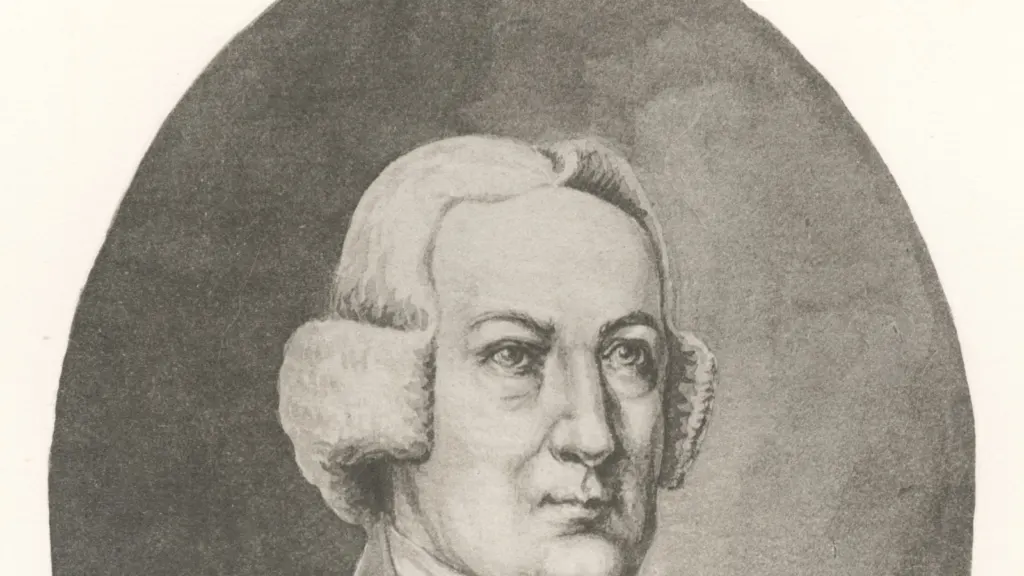
Photo: Scan by NYPL, public domain, via Wikimedia Commons.
Samuel Ward was born in Newport in 1725, the son of a governor. After marrying Anna Ray, he moved to Westerly and farmed land there.
Ward entered colonial politics and was a leader of one of the two factions that fought for control of Rhode Island in the mid-1700s. His long rival was Stephen Hopkins of Providence.
Governor
Ward served as governor in 1762 and again from 1765 to 1767. During the Stamp Act crisis he was the only colonial governor who refused to take the oath to enforce the act.
The Continental Congress
In 1774 Ward and Hopkins, now on the same side, were chosen as Rhode Island’s delegates to the First Continental Congress. Ward often chaired the Congress when it met as a committee of the whole.
He caught smallpox in Philadelphia and died in March 1776, a few months before the Declaration of Independence was signed.
His descendants included Julia Ward Howe, author of “The Battle Hymn of the Republic.” Ward’s name is on Ward Senior High School in Westerly, and his story is part of the town’s role in the Revolution.
Add South County Independent as a preferred source on Google (opens in a new tab)