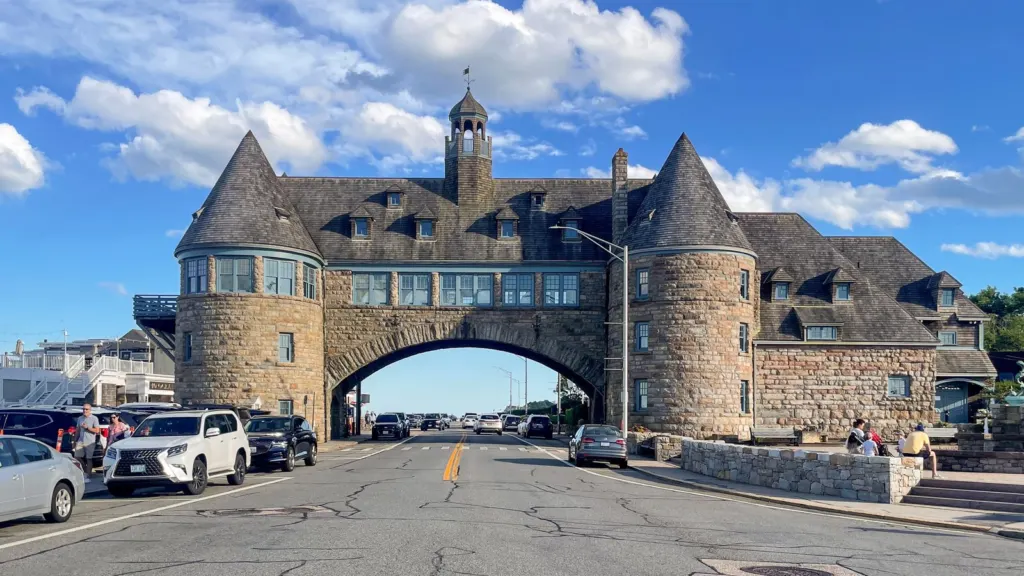
The Towers over Ocean Road in Narragansett, along the town's seawall. Photo: ajay_suresh, CC BY 2.0, via Wikimedia Commons.
Narragansett is asking residents, for the second time this fall, how far the town should go in rewriting its zoning and development rules around flooding. A two-week comment period on five proposed strategies opens today, Nov. 19, and runs through Nov. 30.
The strategies came out of a climate resilience ordinance review that the town started with no-cost help from the state. The Rhode Island Division of Statewide Planning and the Rhode Island Infrastructure Bank are running the program, the Executive Climate Change Coordinating Council is paying for it, and the state hired the Horsley Witten Group to do the technical work. The town describes it as a roughly year-and-a-half project that builds on its 2022 Community Resilience Building workshop and its 2024 Hazard Mitigation Plan, both of which ranked coastal flooding and erosion, stormwater flooding and extreme heat among Narragansett’s top risks.
Consultants presented the first draft of ideas at a public workshop at Town Hall on Sept. 30. According to the town’s flyer announcing the new comment window, staff want to hear from residents again before anyone starts drafting ordinance language.
Five areas, from flood insurance to plant lists
The preliminary strategy boards posted on the project page lay out what is being considered. In plain terms:
Floodplain management. The aim is to earn property owners a bigger discount on National Flood Insurance Program policies through FEMA’s Community Rating System, which lowers premiums in towns that go beyond federal minimums. The options include banning outdoor storage of hazardous materials in the floodplain, lowering the “substantial improvement” threshold below 50% of a building’s value (the point at which a renovated or storm-damaged house must be brought up to flood standards), setting higher protection standards for critical facilities in the 500-year floodplain, and requiring new buildings in coastal A zones to meet the stricter rules that now apply in V zones, the areas exposed to waves.
Stormwater. The town would bring its drainage rules closer to the minimum standards in the state stormwater manual and start catching small, incremental increases in paved and roofed area through building permits. It also floats a total lot coverage limit, with the percentage still to be decided.
High water table. Narragansett already has a High Water Table Limitations Overlay District, split into an A zone where groundwater sits within 18 inches of the surface and a B zone where it sits 18 to 36 inches down. The proposal is to explore “sensible limits” on new or expanded basements and other below-ground structures in those zones, to cut down on groundwater flooding and the load on storm drains.
Illicit discharges. More specific language on the kinds of connections that are prohibited to the sanitary sewer, stronger enforcement and corrective-action options, and new rules covering illegal hookups to the storm drain system, which federal stormwater permits require.
Landscaping. Updated plant lists and hardiness zone references, clearer criteria for keeping trees and vegetation on building sites, and options for dealing with invasive species.
For each strategy, the boards include a checklist that asks whether it reduces risk, fits within existing rules and conflicts with state law. Most of the changes would sit inside the zoning ordinance and the subdivision and land development regulations, so any changes would come through public hearings before town boards rather than a ballot question.
How to weigh in
Residents can review the five boards on the project page and send comments through the contact form there. The town’s environmental planning specialist, Ryan DiPanni, is listed as the contact at rdipanni@narragansettri.gov or (401) 782-0632.
The timing is pointed. The National Weather Service office in Norton is tracking a strong coastal storm for Sunday night into Monday, and astronomical tides are climbing toward the Nov. 24 full moon. Narragansett has spent the past several years wrestling with water on more than one front, from the delayed Narrow River dredging to the exposed stretch of Ocean Road along the seawall by the Towers.
Once the comment period closes, the town says it will use the feedback as it develops draft regulatory amendments. More coverage of the town is on our Narragansett page.
Add South County Independent as a preferred source on Google (opens in a new tab)