Photo: Paul Morris from USA / Wikimedia Commons, CC BY-SA 2.0
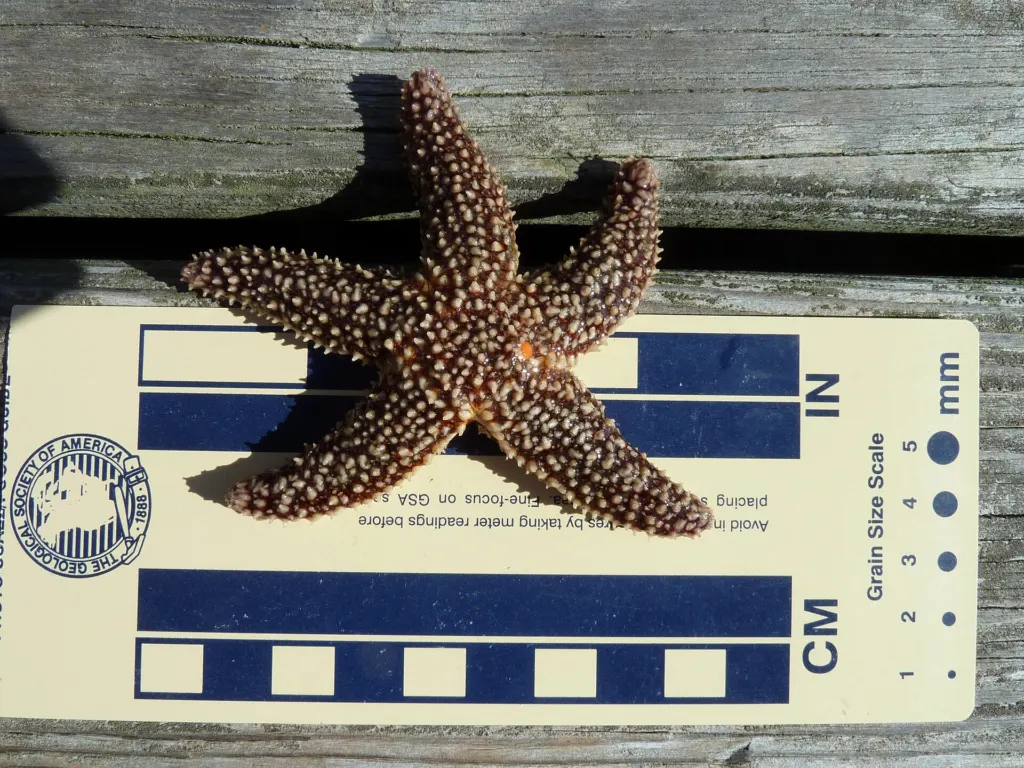
Sea stars, commonly called starfish, are a familiar sight in Rhode Island tide pools and on the rocks below Narragansett’s Ocean Road. In some years, though, beachgoers and divers have reported finding far fewer, or finding sea stars that look sick: twisted arms, white lesions and bodies that seem to melt away.
Sea star wasting
The condition is called sea star wasting. It made headlines in 2013 and 2014, when it killed millions of sea stars along the Pacific coast from Alaska to Mexico, in one of the largest marine wildlife die-offs on record. Outbreaks have also been documented on the Atlantic coast, including in New England. Affected animals develop lesions, lose arms and can die within days.
The cause took years to pin down. In 2025, researchers reported in the journal Nature Ecology & Evolution that a bacterium, Vibrio pectenicida, was responsible for the Pacific outbreak in sunflower sea stars. Many scientists also link outbreaks to warm water, which stresses sea stars and can favor disease.
Rhode Island’s species
The species most often seen in Rhode Island are the common sea star, also called the Forbes sea star, and the northern sea star. Both prey on mussels, clams and oysters, so their numbers matter to shellfish beds and the balance of rocky-shore communities. Their populations naturally rise and fall from year to year with food supply, predators and water temperature, which makes disease effects hard to separate from normal swings.
Warming water
Narragansett Bay and Rhode Island Sound have warmed measurably over the past several decades, according to long-term monitoring by the University of Rhode Island’s Graduate School of Oceanography, whose weekly plankton and temperature survey in the bay dates to the 1950s. Warmer water has been linked to changes in which fish and shellfish are found locally, and it is one of the factors scientists watch in sea star health.
How to help
- Leave sea stars in the water. Lifting them out can stress or injure them.
- Report unusual numbers of sick or dead sea stars to DEM’s Division of Marine Fisheries or to URI researchers.
- Join a beach cleanup or citizen science program run by groups such as Save The Bay.
Add South County Independent as a preferred source on Google (opens in a new tab)